
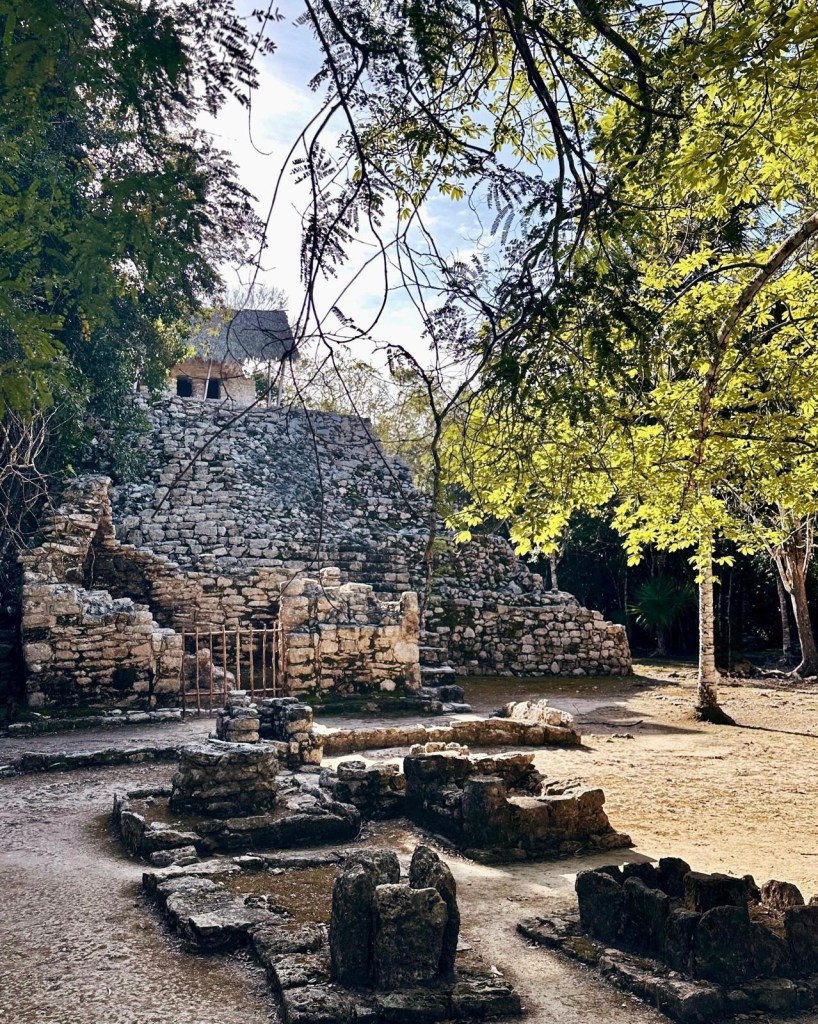
Deep in the Yucatán jungle, the ruins of Cobá offer a glimpse into the grandeur of the ancient Maya civilization. Once a major trade hub with 50,000 inhabitants at its peak, Cobá’s vast network of sacbeob (white stone roads) connected it to distant cities. Unlike the polished ruins of Tulum, Cobá still feels wild—roots creeping over crumbling stones, the jungle reclaiming its place.
At the heart of the site stands Nohoch Mul, the tallest pyramid in the region. Climbing it is no longer allowed, but truth be told, my favorite parts were the ones off the beaten path, hidden after making the extra effort. I imagined Maya life here—their rituals, their games (yes, actual ball games—look it up)—as I wandered through the ruins. Then, in the trees above, a group of monkeys played, a reminder that this place is still inhabited, just in a different way.
Afterwards, I visited Cenote Multum-Ha, a sinkhole tucked beneath the limestone nearby. The cool, dim cavern held crystal-clear water, once considered a gateway to the underworld. Cenotes were also vital water sources, and given their sacred status, I doubt the Maya would have splashed around in them like the tourists do today.
 Josephine in New York City